
Start with the survey task, site conditions and required result. This guide compares the main equipment categories and the questions to include in your brief.
Each method has useful applications and practical limits. Choose around the work rather than a single headline accuracy figure.
Direct measurement and set-out

Measure angles and distances to a prism or surface. Often used for construction set-out, control and as-built checks where sight lines can be maintained.
How total stations work →Positioning across open ground

Satellite-based positioning can cover broad sites efficiently. Sky visibility, correction quality, project datum and independent checks affect whether the result suits the work.
Satellite positioning →Measured surfaces and point clouds

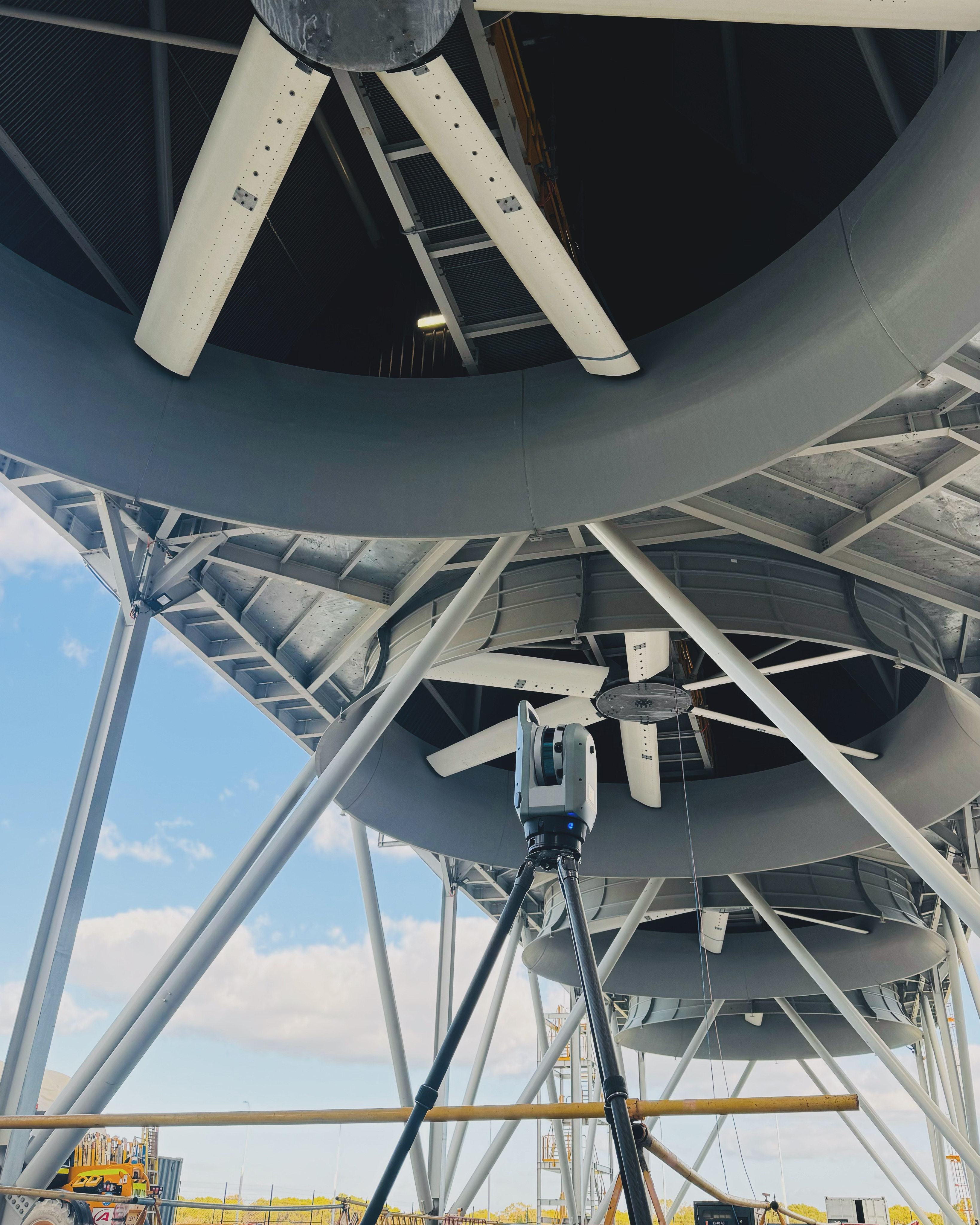
Capture visible surfaces for documentation and modelling. Confirm which features must be captured, how obscured areas will be handled and what control and checks are required.
Laser scanning services →Aerial imagery and terrain data

Photogrammetry or LiDAR can support broad-area mapping, surface comparisons and progress records. Site visibility, flight constraints and ground verification remain part of the scope.
Aerial mapping services →Tracked targets and repeated work

Automatic target tracking can suit repeated pickup and set-out tasks. The crew still needs verified control, suitable sight lines and a checking procedure.
Total station types →Height observations

Levelling instruments support height transfer and checks. Confirm the height datum, reference marks, observation procedure and tolerance for the feature being measured.
Accuracy and tolerances →These are starting points for a scope discussion. The site and project specification can change the method.
Total station or combined ground survey
Confirm: Design revisions, sight lines, stable control and the tolerance for each element.
GNSS or a combined survey
Confirm: Sky visibility, obscured features, observation density and the project datum.
Laser scanning with ground control
Confirm: Required surfaces, hidden areas, model detail and accepted file formats.
Drone, GNSS or a combined survey
Confirm: Survey extent, base surface, vegetation, boundaries and repeatability.
Levelling or suitable ground observations
Confirm: Reference stability, height system, required tolerance and independent checks.
A method matched to the movement being observed
Confirm: Reference stability, movement threshold, observation frequency and reporting.
Manufacturer figures describe an instrument under stated conditions. A survey brief also needs to define the result and how it will be checked.
Begin with the tolerance and acceptance test for the delivered survey. An instrument specification alone does not show that a project result will meet them.
Read specifications with their stated conditions: range, target, observation mode, environment and correction method. Compare like with like.
Confirm the survey control, project grid and height system. A precise coordinate is not useful if it is tied to the wrong reference.
Ask what observations will check the work, what records will be supplied and how gaps or unsuitable results will be reported.
For a closer comparison, read our total station vs GNSS guide and drone methods and limits guide.
The suitable equipment depends on the task, tolerance, site conditions, control and required outputs. Many projects combine methods because set-out, surface capture and verification have different needs.
GNSS can suit broad open sites with reliable sky visibility. Total stations can suit direct measurements where sight lines are available, including obstructed or indoor sites. Confirm the project tolerance and checks before choosing; our comparison guide explains the trade-offs.
No. The result also depends on control quality, setup, target or surface, observation conditions, datum, processing and verification. Ask for evidence about the delivered survey rather than relying on the instrument specification alone.
Ask how equipment condition is checked, which calibration records are relevant, what independent observations will verify the work and how the achieved result will be documented.
Let us bring precision to your next engineering challenge.
Get in Touch →